Can I Use CapCut for Commercial Use? A Plain-English Answer
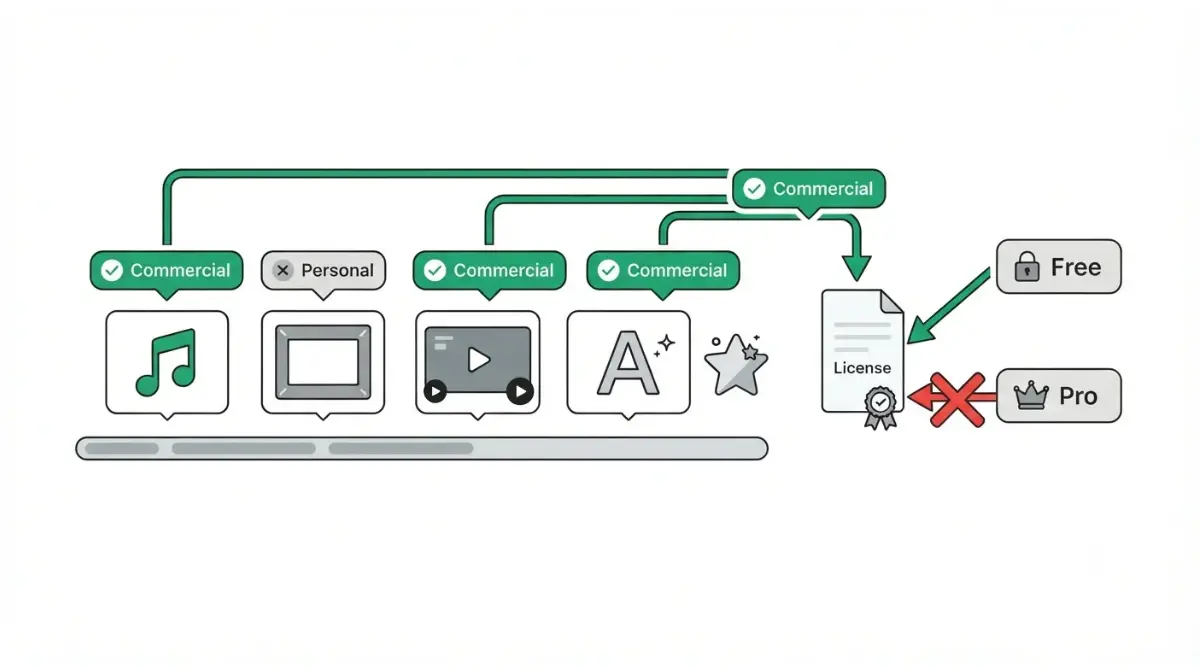
Table of Contents
Yes, with limits. Under CapCut’s US Materials License Agreement (last updated 22 January 2026, read 30 September 2026), only materials marked “commercial use” may go into promotional or advertising content. Ordinary Sounds are personal-use only, Commercial Sounds cover CapCut, TikTok and TikTok for Business, and one non-commercial CapCut material in the mix limits the export to personal use.
🧾 Not Tested: This page reads CapCut’s US agreements as published on 30 September 2026. It is not legal advice, and we did not test CapCut or open its logged-in screens.
Which CapCut license and terms apply to you?
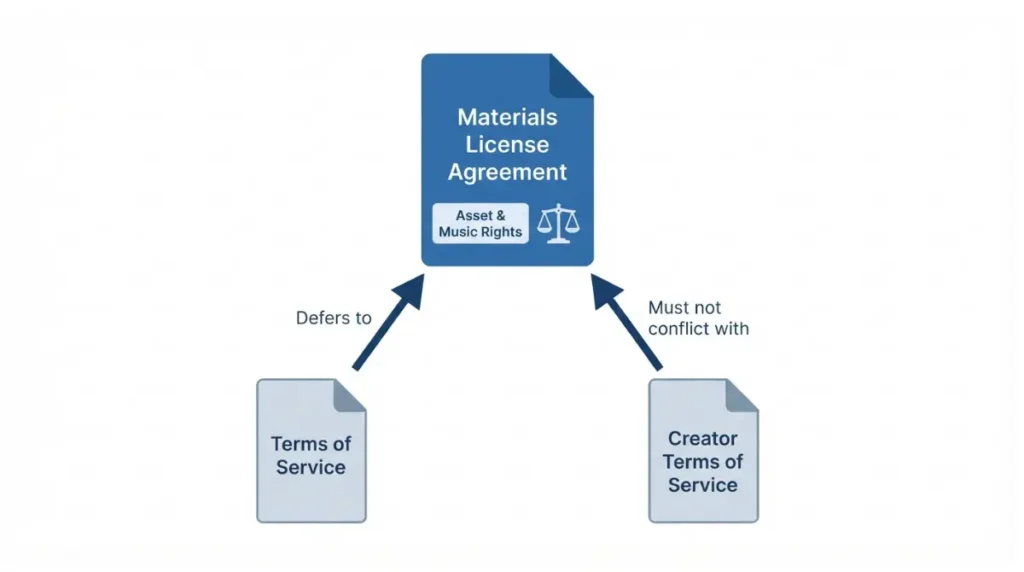
Three US agreements decide commercial questions, all retrieved 30 September 2026.
The three US agreements at a glance
| Agreement | Decides | Last updated |
|---|---|---|
| Materials License Agreement | What each material and sound may be used for | 22 January 2026 |
| Terms of Service | Account rules; defers material rights to the Materials License | 15 April 2026 |
| Creator Terms of Service | Licenses CapCut content for personal, non-commercial use on creator accounts | 22 January 2026 |
Where they conflict on materials or music, the Materials License prevails.
Creator accounts and Pippit are treated differently
We found no passage reconciling the Creator Terms with the Materials License, so creator-account holders should ask CapCut in writing. The Terms of Service expressly permit commercial use of Pippit’s content, subject to the Materials License. These are the US versions; we did not capture others.
What CapCut’s license allows for commercial content
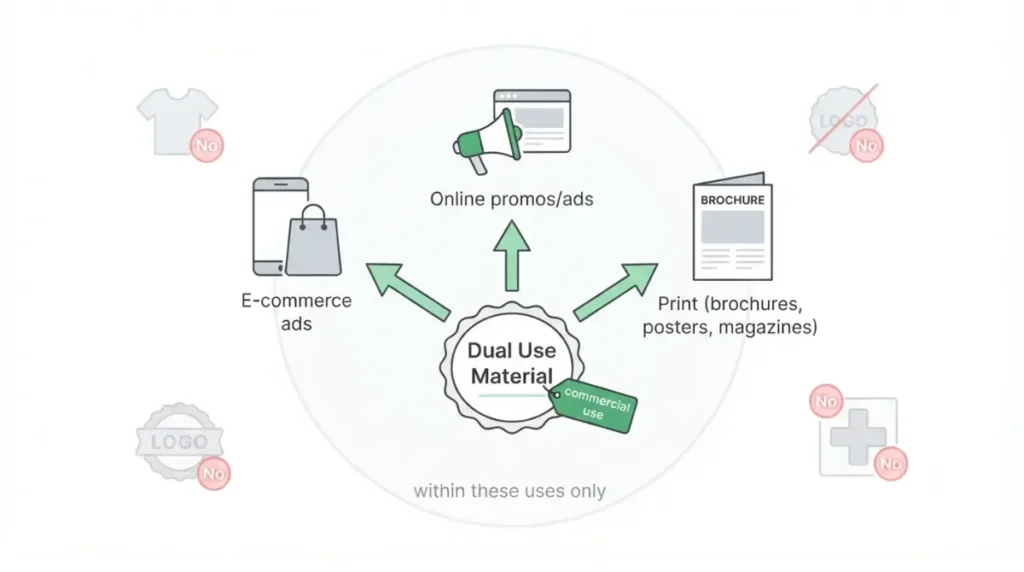
Materials marked “commercial use” or “commercial” are Dual Use materials. Content made solely from them may be used commercially only as the agreement lists (updated 22 January 2026).
Dual Use materials: what you can make
- Digital promotional or advertising material for goods or services on e-commerce platforms, without endorsing authenticity, legality or quality
- Promotional or advertising material on other online media
- Print: brochures, posters and albums not for resale, inside pages of newspapers, magazines and books, and outdoor advertisements
Term, territory and re-edits
Each material shows its own license term and territory in CapCut, licenses are granted per export, and you may edit a material only inside CapCut. CapCut may withdraw materials without notice, and you must stop using one once it is unavailable.
⚠️ This Costs You: A minor re-edit of an exported video means paying again for any paid material in it, though a subscription may cover some.
What CapCut’s license does not allow
Marked materials still carry exclusions.
Mixing commercial and non-commercial materials
If one export combines a Dual Use material with a Non-commercial Use material, the whole export is limited to personal, non-commercial use (updated 22 January 2026). Check every clip, effect, font and sound, not just the main one.
Restricted industries, merchandise and logos
The agreement bars use in or with:
- Adult content, and promotion of adult venues, escort or dating services
- Tobacco, pharmaceutical, healthcare, herbal or medical products, including dietary supplements
- Merchandise such as mugs, T-shirts and posters, sold or not
- Use as a trademark, brand name or logo
- Defamatory, offensive, unethical or illegal content
Can you use CapCut music commercially?
CapCut splits its music in two, and neither is a general commercial license.
Sounds vs Commercial Sounds
| Type | Allowed use | Limit |
|---|---|---|
| Sounds | Personal entertainment, non-commercial | Any commercial purpose, including promoting a brand, needs separate rights |
| Commercial Sounds | Commercial users showing video in CapCut, TikTok, TikTok for Business | Anywhere else needs permission from every rights holder |
| Music you supply | Whatever your license covers | You confirm you created it or hold all rights |
Source: Materials License, updated 22 January 2026.
Where Commercial Sounds stop working
YouTube is not one of the three Permitted Platforms, so a Commercial Sound in a YouTube upload needs separate permission from the rights holders. The agreement does not say whether an ad-revenue channel counts as commercial for ordinary Sounds, so we cannot answer that. TikTok’s Commercial Music Library guidance (last updated July 2025, retrieved 30 September 2026) says businesses cannot use its general music library commercially.
Does CapCut Pro give you commercial rights?
CapCut Pro is not named as a source of commercial rights; the Materials License (updated 22 January 2026) ties them to the mark on each material.
Free or paid isn’t the deciding factor
| Material | Free or paid? | Commercial use? |
|---|---|---|
| Marked commercial | Either | Limited to the listed uses |
| Not marked | Either | Personal and non-commercial only |
What a subscription can and can’t change
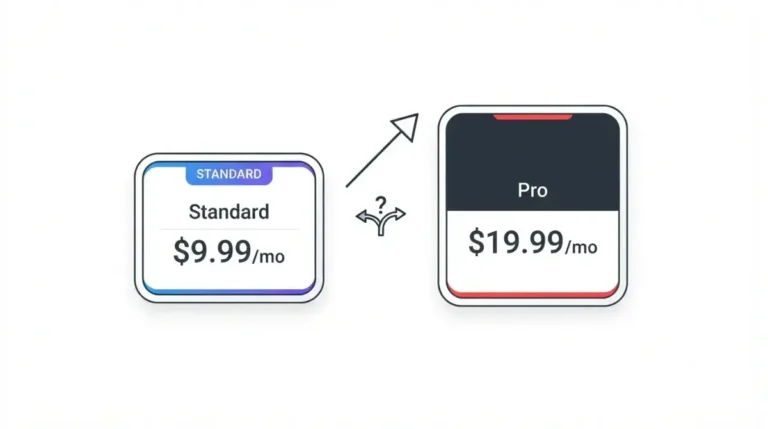
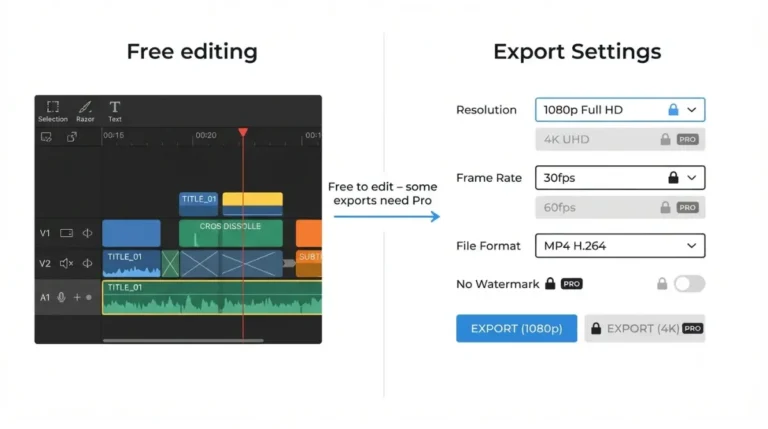
A subscription may let you use certain paid materials without extra fees for a period (updated 22 January 2026), but it does not change a material’s mark. CapCut’s Trust Center legal page says only materials expressly labeled “Commercial Use” can be used commercially (captured 30 September 2026; page undated). Whether free accounts can reach commercial-marked materials, and how the app words the mark, sits behind the login, which we did not open. For prices, see what CapCut Pro pricing includes and CapCut’s free-plan export limits.
Using CapCut for client work, ads and YouTube
The agreement names neither clients nor YouTube channels, so the practical question for client work is what sits inside each export.
A worked audit of one export (illustrative)
Illustration, not a test we ran: an ad with one stock clip, one template and one track. Keep the clip and template only if each is marked commercial, replace an ordinary Sound, and treat the export as personal-use if the template carries a non-commercial material.
✅ Do This: Record each material’s mark, license term and territory with the export date, and keep the record with the file.
Client footage and account responsibility
The Terms of Service (updated 15 April 2026) treat uploads as non-confidential and say not to upload content confidential to someone else, so keep confidential client footage out. A business using CapCut is responsible for its account, including use by others. You cannot give another person the right to use a material (Materials License, updated 22 January 2026), and client deliverables are not named in the commercial list, so ask CapCut in writing, as the Materials License allows.
Frequently asked questions
1. Can I use CapCut for commercial use on the free or Pro plan?
Commercial use follows each material’s mark, not the plan; marked and unmarked materials can each be free or paid (Materials License, updated 22 January 2026).
2. Can I use CapCut music in a monetized YouTube video?
YouTube is not a Permitted Platform for Commercial Sounds, and the agreement does not say whether ad revenue counts as commercial (updated 22 January 2026).
3. Can I use CapCut templates for commercial ads?
Only if every material in them is marked commercial; one non-commercial material limits the export to personal use (updated 22 January 2026).
4. Can I use CapCut for commercial client work?
The commercial list names promotional uses, not client deliverables; ask CapCut in writing (Materials License, updated 22 January 2026).
5. Which industries can’t use CapCut materials commercially?
The agreement bars use in adult content, escort and dating ads, tobacco, and pharmaceutical, healthcare, herbal or medical product ads (updated 22 January 2026).
6. Can I re-edit a CapCut export without paying again?
For paid materials, even a minor re-edit means paying again, though a subscription may cover some (Materials License, updated 22 January 2026).
7. What happens if CapCut removes a material?
CapCut may withdraw materials without notice, and you must stop using one once it is unavailable (Materials License, updated 22 January 2026).
8. Do CapCut’s commercial-use terms differ outside the US?
We captured only the US versions of the agreements on 30 September 2026, so we cannot say.
What to do next
Check each material’s mark, replace ordinary Sounds, and license music yourself for any platform beyond CapCut, TikTok and TikTok for Business. For anything the agreement does not cover, ask CapCut in writing.